
Turbinate Reduction in Mumbai
“Doctor, my nose is always blocked, even when I have no cold.”
“I cannot breathe through my nose while sleeping.”
“I have been using nasal sprays for months but there is no lasting relief.”
Allergic rhinitis, one of the leading causes of turbinate hypertrophy, affects an estimated 20 to 30 percent of the Indian population, with urban cities like Mumbai reporting higher rates due to pollution and dust exposure. Studies also indicate that inferior turbinate hypertrophy is identified in nearly 60 percent of patients presenting with chronic nasal obstruction in ENT outpatient departments across India, making it one of the most commonly treated structural nasal conditions.
These are common complaints heard in ENT clinics every day. If you are experiencing persistent nasal blockage that does not improve with medicines, the problem may be related to enlarged turbinates. If you are searching for turbinate reduction in Mumbai, it usually means the nasal blockage has become chronic, affecting sleep, breathing, and daily comfort. Understanding the condition and the available treatment options can help you make the right decision.
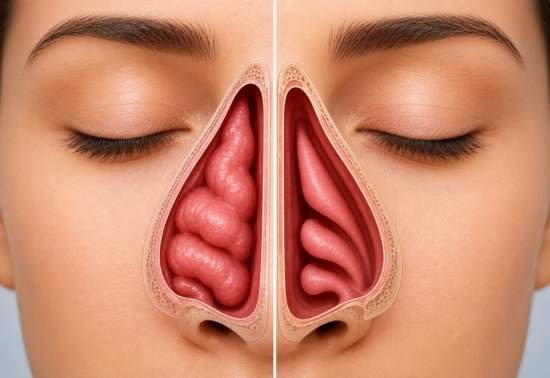
What Are Turbinates?
Turbinates are small, curved bony structures covered with soft tissue inside the nose. There are three pairs of turbinates — the inferior, middle, and superior turbinates. Their main function is to filter, warm, and humidify the air we breathe. When these structures become enlarged due to inflammation, allergy, infection, or hormonal changes, they can partially or fully block the nasal passage, making normal breathing difficult.
Enlarged turbinates, especially the inferior turbinates, are one of the most common causes of chronic nasal obstruction. Studies indicate that inferior turbinate hypertrophy accounts for a significant proportion of nasal obstruction cases seen in ENT practice, and many patients do not achieve lasting relief with medication alone.
Symptoms That Suggest Enlarged Turbinates
You may have enlarged turbinates if you experience:
- Chronic nasal blockage on one or both sides
- Difficulty breathing through the nose during sleep
- Snoring or disrupted sleep due to nasal congestion
- Mouth breathing, especially at night
- Reduced sense of smell
- Frequent nasal congestion without a cold or infection
- Nasal blockage that alternates between sides throughout the day
- Dependence on nasal decongestant sprays for temporary relief
If these symptoms are persistent, an evaluation by an ENT specialist Mumbai is strongly recommended. Chronic nasal blockage left unaddressed can lead to mouth breathing habits, sleep disturbances, and poor quality of life.
Common Causes of Enlarged Turbinates
Turbinate hypertrophy can develop due to various reasons, including:
- Allergic rhinitis — one of the most frequent causes
- Chronic sinusitis or recurrent nasal infections
- Environmental irritants such as dust, pollution, or smoke
- Hormonal changes during pregnancy or puberty
- Overuse of nasal decongestant sprays leading to rebound congestion (rhinitis medicamentosa)
- Deviated nasal septum causing compensatory turbinate enlargement on one side
- Non-allergic rhinitis
Identifying the underlying cause helps in planning the right treatment approach and deciding whether turbinate reduction Mumbai is appropriate for the patient.
How Turbinate Reduction Is Planned?
Treatment is not the same for everyone. The ENT specialist will first take a detailed history to understand the duration, triggers, and pattern of nasal blockage. A thorough nasal examination using an endoscope helps assess the size and position of the turbinates, the condition of the nasal lining, and whether other factors such as a deviated septum or nasal polyps are contributing to the blockage.
Imaging with CT scan of the nose and sinuses may be advised when there is suspicion of sinusitis, significant septal deviation, or other structural abnormalities. This helps in planning treatment accurately.
Medical Treatment Before Surgery
Most ENT specialists prefer to first try medical management before recommending surgery. Medicines may include nasal corticosteroid sprays to reduce inflammation, antihistamines for allergy-related enlargement, saline nasal rinses to keep the nasal passages clear, and treatment of underlying infections if present.
Medical treatment works well for many patients, especially when the cause is allergic rhinitis that is well controlled. However, when the turbinates remain enlarged despite adequate medical treatment, or when there is structural hypertrophy that does not respond to medicines, turbinate reduction surgery Mumbai becomes necessary.
Turbinate Reduction Procedures
Coablation assisted Turbinate Reduction
Submucosal Resection of Turbinate
Partial Turbinectomy
Combined Procedures
What to Expect After Turbinate Reduction?
Recovery depends on the procedure performed. In general:
- Radiofrequency procedures usually have a shorter recovery with mild discomfort for a few days
- Surgical procedures may involve mild nasal packing and a recovery period of one to two weeks
- Patients are advised to avoid strenuous activity, dusty environments, and blowing the nose forcefully for some time after the procedure
- Saline nasal rinses and prescribed medicines help in healing
- Follow-up visits are important to monitor healing and ensure the nasal passage is clear
Most patients notice a significant improvement in nasal breathing after recovery, along with better sleep quality and reduced dependence on nasal sprays.
Why Timely Treatment Matters?
Chronic nasal blockage is not merely an inconvenience. Long-standing mouth breathing can affect sleep quality, cause dry throat, and in children may affect facial development. Poor nasal breathing has also been linked to sleep-disordered breathing and snoring. Addressing enlarged turbinate treatment Mumbai in a timely manner can prevent these secondary problems and significantly improve overall wellbeing.
Expert ENT Care with Dr Shama Kovale
Dr Shama Kovale — Best ENT Specialist in Mumbai is a highly experienced ENT surgeon with over 23 years of clinical and surgical expertise. She holds MBBS, DLO, and MS in ENT from B.Y.L. Nair Hospital, Mumbai, and has advanced training in Voice and Swallowing Disorders from UC Davis, California, along with a Laryngology Fellowship from Bombay Hospital and Cochlear Implant Training from P.D. Hinduja Hospital.
Currently practicing at Kokilaben Dhirubhai Ambani Hospital and consulting through Voice of ENT, Dr Shama Kovale is known for accurate diagnosis, evidence-based ENT treatment, advanced endoscopic ENT surgeries, and patient-focused care for nasal, voice, swallowing, airway, and sinus-related conditions. Patients looking for an ENT specialist Mumbai or seeking expert evaluation for turbinate reduction Mumbai often prefer Dr Shama Kovale for her structured approach and strong clinical experience.
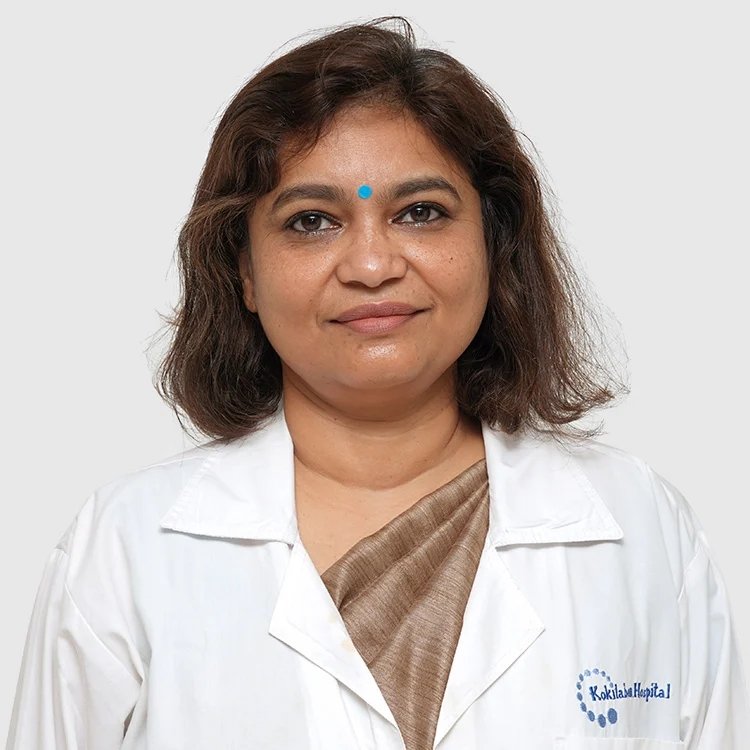
Dr. Shama S Kovale – Experience in Voice and Cancer Care
With over 23 years of experience in ENT and subspecialty expertise in laryngology, Dr. Shama S. Kovale has built her reputation on precision diagnosis, voice conservation, and minimally invasive management of throat cancer.
- Trained internationally in voice and swallowing disorders (UC Davis, USA)
- Performs microlaryngoscopic surgeries using laser and co-ablation
- Trusted by voice professionals, teachers, and at-risk cancer patients alike
Practicing at Kokilaben Dhirubhai Ambani Hospital, she is one of the Top ENT Doctors in Mumbai, widely recognized for Vocal Cord Cancer Treatment In Mumbai with functional preservation.
Patient Reflections: Care That Rebuilt Confidence
“My hoarseness was diagnosed as early-stage vocal cord cancer. Dr. Shama S Kovale removed the lesion through a laser procedure—no stitches, no voice loss.”
– Vijay R., 48, Theatre Artist

“A non-healing mouth ulcer worried me. Dr. Kovale’s biopsy confirmed early cancer. She acted quickly, and I didn’t need open surgery. I owe my health to her skill and speed.”
– Parveen S., Homemaker
“Persistent throat discomfort turned out to be something serious. The clarity and care at Kokilaben Dhirubhai Ambani Hospital and Dr. Kovale’s calm confidence made all the difference.”
– Manoj K., Business Owner
FAQs – Turbinate Reduction in Mumbai
Is turbinate reduction a major surgery?
Can turbinate enlargement come back after treatment?
Will turbinate reduction affect the sense of smell?
Is turbinate reduction done along with septoplasty?
How do I know if I need turbinate reduction?
If you have persistent nasal blockage that does not improve with nasal sprays or allergy medicines, consultation with an ENT specialist is the right step. An endoscopic examination will confirm whether turbinate reduction is appropriate.
Persistent nasal blockage should never be dismissed as a minor inconvenience. Enlarged turbinates can significantly impact sleep, breathing, and daily life. With the right diagnosis and a tailored treatment plan, turbinate reduction Mumbai can restore comfortable nasal breathing and improve overall quality of life.
For consultation with Dr Shama Kovale, visit Kokilaben Dhirubhai Ambani Hospital and Medical Research Institute, Rao Saheb Achutrao Patwardhan Marg, Four Bungalows, Andheri West, Mumbai, Maharashtra 400053.
Call: +91-91528 50769