
Adenoids Treatment in Mumbai
“My daughter breathes through her mouth all the time. Her teacher says she looks sleepy in class.”
“My son has had four ear infections in the last six months. The ENT says it may be related to his adenoids.”
These are conversations that happen every day in paediatric ENT clinics across Mumbai. Enlarged adenoids are one of the most common — and most commonly missed — causes of chronic nasal obstruction, sleep disruption, recurrent ear infections, and mouth breathing in children. If you are searching for adenoids treatment in Mumbai, it usually means your child’s symptoms have persisted long enough that specialist evaluation is now clearly needed. Early and accurate diagnosis can prevent years of disrupted sleep, repeated infections, and the developmental consequences that follow.
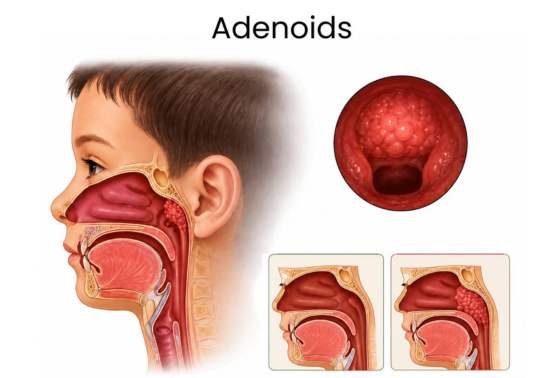
What Are Adenoids and Where Are They Located?
Adenoids are a single mass of lymphoid tissue located at the back of the nasal cavity, above the roof of the mouth and behind the nose. Unlike tonsils, which can be seen by opening the mouth, adenoids are not visible without a nasal endoscope or imaging. They are part of the immune system and help fight infections in early childhood.
Adenoids are largest between the ages of three and twelve years and naturally begin to shrink after that, usually becoming quite small by the teenage years. However, in many children they enlarge significantly — due to repeated infections, allergies, or immune activity — and begin to block the nasal passage and interfere with Eustachian tube function before they have a chance to shrink naturally.
What Causes Adenoid Enlargement?
Adenoid hypertrophy in children can result from:
- Recurrent upper respiratory tract infections — each infection can cause temporary enlargement that becomes permanent over time
- Allergic rhinitis — nasal allergy leads to chronic inflammation that keeps the adenoids persistently enlarged
- Environmental factors — dust, pollution, and passive smoke exposure increase the frequency of nasal infections and allergy
- Genetic predisposition — a family history of enlarged tonsils or adenoids increases the likelihood in children
- Chronic sinusitis — ongoing sinus infection can keep the adenoid tissue inflamed and swollen
In Mumbai, the combination of high pollution levels, dust exposure, and the prevalence of allergic rhinitis creates conditions where adenoid enlargement in children is particularly common. An enlarged adenoids doctor in Mumbai will always investigate underlying allergy and infection as contributing factors when planning treatment.
Symptoms of Enlarged Adenoids in Children
Parents should watch for the following signs that may indicate adenoid enlargement:
- Loud snoring — one of the most consistent signs, often noticed by parents from another room
- Mouth breathing — the child breathes through the mouth even when well, especially during sleep
- Nasal voice — speech sounds muffled or as though the child has a permanently blocked nose
- Frequent ear infections — enlarged adenoids block the Eustachian tube opening, trapping fluid in the middle ear
- Glue ear — persistent fluid in the middle ear causing hearing reduction and inattentiveness
- Restless sleep and night waking — due to difficulty breathing through a blocked nasal passage
- Daytime fatigue and poor concentration — a direct consequence of disrupted sleep
- Recurrent nasal discharge — persistent runny or blocked nose that does not clear fully
- Obstructive sleep apnoea — pauses in breathing during sleep in severe cases, requiring urgent evaluation
- Delayed speech or hearing difficulties — when glue ear affects hearing during key developmental years
If several of these symptoms are present together, consultation with an enlarged adenoids doctor in Mumbai should not be postponed. The impact of untreated adenoid enlargement on a child’s sleep, hearing, speech, and school performance can be significant and long-lasting.
How Enlarged Adenoids Are Diagnosed?
Diagnosis begins with a detailed clinical history from the parents, covering the duration and pattern of snoring, mouth breathing, ear infections, and sleep quality. The enlarged adenoids doctor in Mumbai will then examine the child using a nasal endoscope — a thin, flexible camera passed gently into the nostril — to directly visualise the adenoid tissue and assess how much of the nasal airway it is blocking.
Additional investigations may include:
X-ray of the Nasopharynx
Hearing Test
Sleep Study
When Is It Tried First?
Not every child with enlarged adenoids needs surgery immediately. When the enlargement is mild to moderate and symptoms are manageable, medical treatment is tried first. This may include nasal corticosteroid sprays to reduce adenoid inflammation, antihistamines and allergy treatment when allergic rhinitis is a contributing factor, saline nasal rinses to clear the nasal passage, and antibiotics when active infection is present.
Medical treatment is reviewed after a defined period. If symptoms improve significantly and the child’s sleep and hearing return to normal, surgery may be avoided or deferred. However, if symptoms persist, worsen, or cause significant complications such as recurrent ear infections or sleep apnea, adenoids treatment in Mumbai through surgical intervention becomes necessary.
Surgical Removal of Adenoids
Adenoidectomy is the surgical removal of the adenoid tissue. It is one of the safest and most commonly performed procedures in paediatric ENT surgery. The surgery is done under general anaesthesia and typically takes 20 to 30 minutes. It is performed through the mouth without any external cuts or visible scars.
An experienced adenoidectomy surgeon uses a small curved instrument to remove the adenoid tissue under direct visualisation, ensuring complete removal while protecting surrounding structures. Modern techniques including endoscope-assisted adenoidectomy allow the surgeon to confirm that the adenoid tissue is fully cleared and the Eustachian tube openings are no longer obstructed.
Adenoidectomy is recommended when:
- Nasal blockage and mouth breathing persist despite adequate medical treatment
- Recurrent ear infections are linked to adenoid obstruction of the Eustachian tube
- Glue ear with hearing loss is present and not resolving on its own
- Obstructive sleep apnoea is confirmed or strongly suspected
- The child’s sleep, school performance, or quality of life is significantly affected
Adenoidectomy with Tonsillectomy or Grommets
Adenoidectomy with Tonsillectomy
Adenoidectomy with Grommet Insertion
When glue ear — persistent middle ear fluid — is present alongside adenoid enlargement, grommet insertion (ventilation tube placement) may be performed at the same time as adenoidectomy. The grommets allow fluid to drain from the middle ear and restore hearing, while adenoidectomy addresses the underlying cause of Eustachian tube obstruction.
An experienced adenoidectomy surgeon in Mumbai will assess each child individually and recommend the most appropriate combination of procedures to achieve the best outcome in a single anaesthetic session where possible.
Adenoid removal cost in Mumbai
One of the most common questions parents ask before proceeding is about adenoid removal cost in Mumbai. The cost of adenoidectomy varies depending on several factors:
- Type of facility — a hospital-based procedure will differ in cost from a standalone surgical centre
- Anaesthesia and surgical fees — these are typically separate from the facility charges
- Whether additional procedures are performed — adenoidectomy combined with tonsillectomy or grommet insertion will have a different cost structure than adenoidectomy alone
- Pre-operative investigations — blood tests, hearing tests, and X-rays or endoscopy done before surgery add to the overall cost
- Post-operative follow-up — follow-up consultations and any post-operative medicines are part of the overall treatment investment
It is advisable to discuss adenoid removal cost in Mumbai directly with the hospital and surgical team before the procedure. Most reputed ENT centres provide a transparent cost estimate once the child has been assessed and the procedure plan is finalised. Importantly, the cost of surgery should be weighed against the ongoing cost of repeated doctor visits, antibiotic courses, hearing aids, and the long-term impact of untreated adenoid problems on the child’s development.
Recovery After Adenoidectomy
- Most children are discharged the same day or after one night in hospital
- Mild throat discomfort and nasal congestion are common in the first few days
- Soft, cool foods are recommended for the first week — ice cream, yoghurt, and soft cooked foods are well tolerated
- School can usually be resumed within one week, depending on the child’s recovery
- Strenuous physical activity should be avoided for two weeks
- Improvement in snoring and mouth breathing is often noticed within the first few nights after surgery
- Follow-up with the surgeon is important to assess healing and confirm that nasal breathing has improved
Expert Adenoids Care with Dr Shama Kovale
Dr Shama Kovale — Best ENT Specialist in Mumbai is a highly experienced ENT surgeon with over 23 years of clinical and surgical expertise. She holds MBBS, DLO, and MS in ENT from B.Y.L. Nair Hospital, Mumbai, and has advanced training in Voice and Swallowing Disorders from UC Davis, California, along with a Laryngology Fellowship from Bombay Hospital and Cochlear Implant Training from P.D. Hinduja Hospital.
Currently practicing at Kokilaben Dhirubhai Ambani Hospital and consulting Dr Shama Kovale has extensive experience in paediatric ENT surgery, including adenoidectomy, combined adenotonsillectomy, and grommet insertion. Parents across Mumbai searching for adenoids treatment in Mumbai, a trusted enlarged adenoids doctor Mumbai, or an experienced adenoidectomy surgeon in Mumbai consistently choose Dr Shama Kovale for her thorough diagnostic approach, child-sensitive consultation style, and precise surgical outcomes.
Enlarged adenoids in children are not a problem to wait out indefinitely. When a child’s sleep, hearing, speech, and school performance are being affected, specialist evaluation is the responsible next step. With accurate diagnosis and appropriate treatment — whether medical or surgical — the improvement in a child’s wellbeing can be profound and rapid.
For consultation with Dr Shama Kovale at Voice of ENT, visit Kokilaben Dhirubhai Ambani Hospital and Medical Research Institute
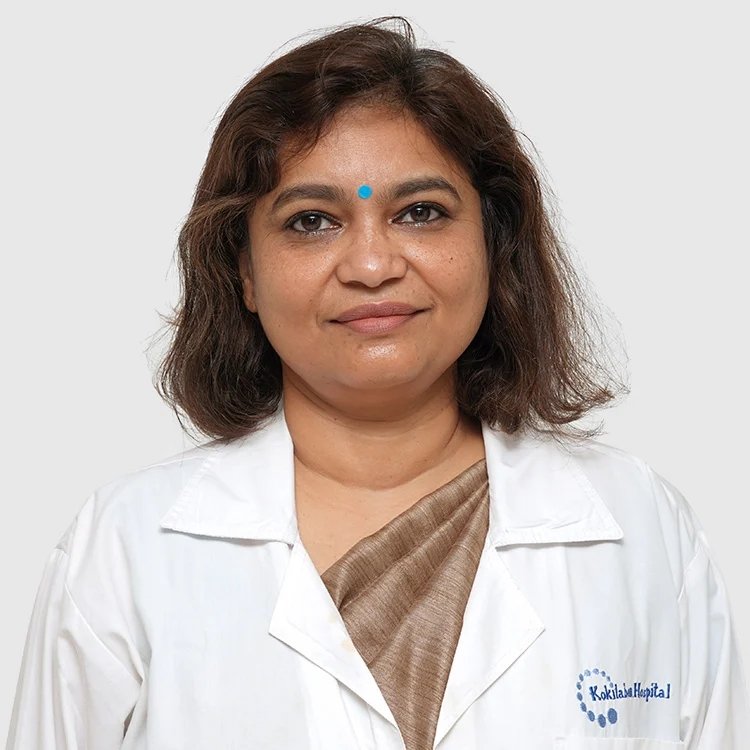
Dr. Shama S Kovale – Experience in Voice and Cancer Care
With over 23 years of experience in ENT and subspecialty expertise in laryngology, Dr. Shama S. Kovale has built her reputation on precision diagnosis, voice conservation, and minimally invasive management of throat cancer.
- Trained internationally in voice and swallowing disorders (UC Davis, USA)
- Performs microlaryngoscopic surgeries using laser and co-ablation
- Trusted by voice professionals, teachers, and at-risk cancer patients alike
Practicing at Kokilaben Dhirubhai Ambani Hospital, she is one of the Top ENT Doctors in Mumbai, widely recognized for Vocal Cord Cancer Treatment In Mumbai with functional preservation.
Patient Reflections: Care That Rebuilt Confidence
“My hoarseness was diagnosed as early-stage vocal cord cancer. Dr. Shama S Kovale removed the lesion through a laser procedure—no stitches, no voice loss.”
– Vijay R., 48, Theatre Artist

“A non-healing mouth ulcer worried me. Dr. Kovale’s biopsy confirmed early cancer. She acted quickly, and I didn’t need open surgery. I owe my health to her skill and speed.”
– Parveen S., Homemaker
“Persistent throat discomfort turned out to be something serious. The clarity and care at Kokilaben Dhirubhai Ambani Hospital and Dr. Kovale’s calm confidence made all the difference.”
– Manoj K., Business Owner
FAQs
At what age is adenoidectomy usually performed?
Will my child's adenoids grow back after removal?
Can enlarged adenoids affect my child's speech?
Is adenoidectomy done under general anaesthesia?
How do I know if my child needs adenoidectomy or just medical treatment?
Call: +91-91528 50769